Keeping your online space safe starts with setting up your router the right way. When a house has lots of gadgets and uses Wi-Fi, the router stands guard like a castle’s gatekeeper. Forgetting to tweak router settings is like leaving your front door wide open for hackers to march in. A properly set router locks out unwanted visitors and keeps your info under tight wraps. Changing default passwords and updating firmware can stop almost 70 percent of common cyber attacks—that’s a big deal most people don’t know. Anyone who stays online or cares about privacy will find that getting the router setup down changes everything. The tricks to turning your router into a digital fortress and dodging nearby cyber threats are just within reach. Keep reading, and someone’s secrets might just save your digital life.
Your Web router enables you to attach the private network in your home or workplace to the general public Internet. Because it is the “doorway” that permits information in and out of your network, much like a genuine door, you need to make sure it is equipped with a good lock. As well as, much like the lock on your house’s front door, you wish to ensure that just you and those you depend on have a trick.
If you just have one computer system, and also it doesn’t utilize a cordless network connection, after that you don’t require a router to connect to the Internet, at least, not a router in your house. Your Internet service provider utilizes a router to connect its network to the Web. Your computer would simply link to your ISP’s network. Because instance, your doorway should be locked with firewall software. My following article will certainly cover firewall software and also just how to use them.
If you utilize a router to attach to the Internet, you must use a firewall program also but, your initial line of defense is the router. If you are a home individual, your ISP normally just provides you one Web (or IP) address to make use of. Even big companies do not have a Net address for each computer they use. For more easy-to-understand information about the internet, visit Swic Online to know more.
Since there are insufficient Net addresses to give every computer it’s very own, routers provide a solution for personal networks, called Network Address Translation (NAT). There are certain teams of IP addresses that are booked for exclusive networks. Those addresses can not directly access, or be accessed, the Web. Instead, computer systems on personal networks use routers to “equate” their addresses to public Net addresses for outgoing communications, as well as to translate public addresses back to their exclusive addresses for incoming communications. Personal networks utilizing NAT can have numerous computers connect with the Net by sharing just one or a few public Internet addresses.
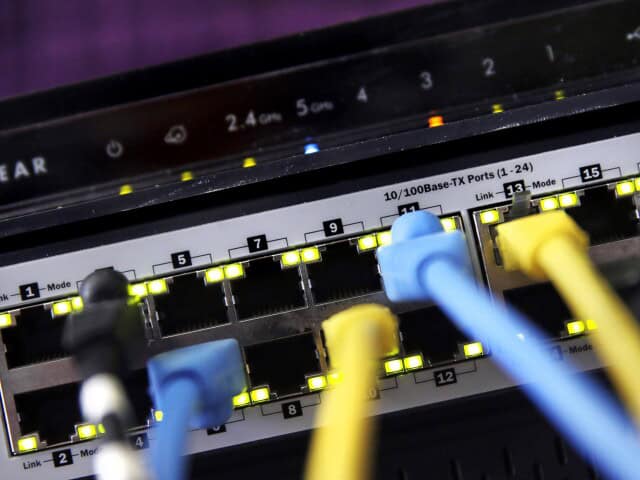
A router supplying NAT solutions actually stops computer systems beyond their personal networks, from launching interactions with computer systems with those on their personal networks. As a matter of fact, personal addresses are successfully concealed from the Web. Internet computers can only reply to ask for communication from the computer systems on private networks. This offers protection from the Internet for those computer systems “behind” the router. Certainly, it’s a little extra complex than this, and exceptions and problems can be configured right into all routers. Nevertheless, for most pc users, routers offering NAT are aiding to protect you from communications that you do not initiate.
Routers are assisting however, they are not enough security by themselves! I will certainly cover the additional actions required to keep you safe, in upcoming messages; Firewalls and Anti-virus/anti-spyware software. Routers additionally require to be very carefully configured so they can safeguard you as much as possible. We require to think of Web safety in terms of layers. It takes many different layers collaborating to offer us sufficient defense.